Published: June 2026
Author: Engineering, Mining and Skills Development Editorial Team
Reviewed By: Technical Trades and Workforce Development Research Desk
Category: Electrical Learnerships | Engineering Careers | Technical Training | Skills Development
Electrical Skills Remain Critical as South Africa Expands Industrial Development
South Africa’s industrial economy continues to rely heavily on qualified electrical professionals to support mining operations, manufacturing facilities, mineral processing plants, and infrastructure development projects.
As employers invest in modern equipment, automation technologies, energy efficiency programmes, and production upgrades, the need for skilled electrical personnel remains significant across multiple sectors.
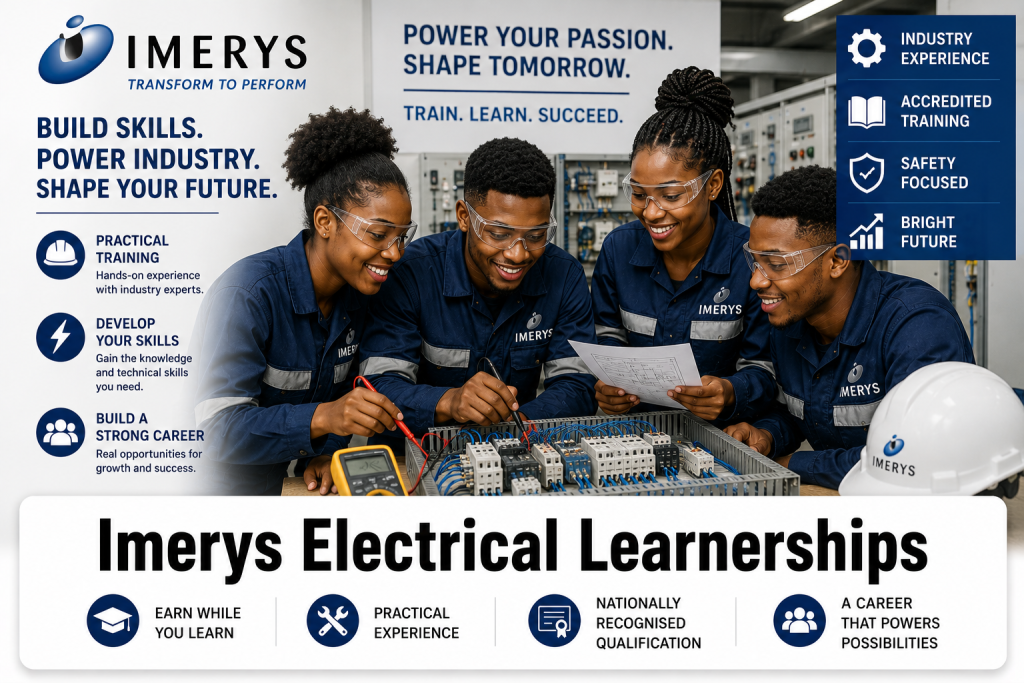
Among the opportunities attracting attention from aspiring artisans and technical professionals are electrical learnership programmes associated with major industrial organisations such as Imerys, a global leader in mineral-based specialty solutions.
Industry experts believe technical learnerships remain one of the most effective pathways for young South Africans seeking practical workplace experience while building careers in high-demand trades.
Why Electrical Careers Continue to Offer Strong Long-Term Prospects
Electrical systems form the foundation of modern industrial operations.
From powering processing equipment and manufacturing lines to maintaining automation systems and ensuring operational reliability, electrical professionals perform work that is essential to productivity and safety.
Unlike some occupations that may be affected by rapid technological change, electrical expertise remains necessary across virtually every major industry.
As South Africa continues investing in industrial growth, infrastructure improvement, renewable energy projects, and digital transformation initiatives, demand for technical skills is expected to remain strong.
Useful Links:
Understanding the Role of an Electrical Learner
Electrical learnerships typically combine structured theoretical instruction with practical workplace exposure.
Participants may gain experience in:
Electrical Maintenance
Supporting inspections, repairs, and maintenance of electrical systems.
Equipment Troubleshooting
Identifying and assisting with electrical faults and operational issues.
Industrial Installations
Learning how electrical infrastructure supports production processes.
Safety Procedures
Understanding workplace safety standards and electrical regulations.
Technical Documentation
Working with electrical diagrams, schematics, and maintenance records.
This combination of classroom learning and practical application helps prepare candidates for long-term careers in the technical trades sector.
Expert Analysis: South Africa Needs More Technical Skills
Labour market researchers continue highlighting shortages in technical and artisan occupations.
Several factors contribute to this demand:
- Industrial expansion projects
- Infrastructure upgrades
- Workforce succession planning
- Increased automation
- Energy-related investments
- Manufacturing modernisation
Industry specialists note that many experienced artisans are approaching retirement age, creating opportunities for the next generation of technical professionals.
This makes learnerships particularly important for addressing future skills requirements.
Industries Recruiting Qualified Electrical Professionals
Electrical skills are highly transferable and can open doors to multiple sectors.
Common industries employing electricians and electrical technicians include:
- Mining
- Mineral Processing
- Manufacturing
- Energy and Utilities
- Construction
- Telecommunications
- Automotive Production
- Logistics
- Petrochemicals
- Renewable Energy
This broad demand provides flexibility and long-term career security for qualified professionals.
Skills Developed Through Electrical Learnership Programmes
Technical employers increasingly seek individuals who possess both practical and professional competencies.
Key skills often developed include:
Technical Knowledge
Understanding electrical systems and industrial equipment.
Problem Solving
Diagnosing and resolving operational challenges.
Safety Awareness
Applying workplace safety procedures consistently.
Teamwork
Collaborating effectively with technicians, engineers, and operations personnel.
Communication Skills
Reporting technical findings clearly and accurately.
Adaptability
Working with evolving technologies and equipment systems.
These skills often remain valuable throughout an individual’s career.
Technology Is Transforming the Electrical Profession
The modern electrical workplace differs significantly from previous generations.
Today’s electrical professionals may encounter:
- Automation systems
- Smart manufacturing technologies
- Industrial sensors
- Digital monitoring platforms
- Predictive maintenance tools
- Renewable energy technologies
As Industry 4.0 technologies become more widespread, electrical professionals who embrace continuous learning are likely to remain highly competitive.
Career Progression Opportunities
Electrical learnerships often serve as the first step toward advanced technical careers.
Potential future pathways include:
- Qualified Electrician
- Electrical Artisan
- Maintenance Technician
- Instrumentation Technician
- Electrical Supervisor
- Engineering Technician
- Reliability Specialist
- Technical Manager
Many experienced professionals also pursue further education and specialized certifications throughout their careers.
Workforce Outlook for 2026 and Beyond
Technical trades remain among the most important components of South Africa’s workforce development strategy.
Government agencies, employers, educational institutions, and industry bodies continue emphasizing the importance of artisan development to support economic growth.
Electrical skills are expected to remain relevant because every major industrial operation depends on reliable electrical infrastructure.
Experts believe demand for technically trained workers will continue as industries adopt more sophisticated production technologies.
Advice for Prospective Applicants
Career advisors recommend that candidates interested in electrical careers focus on:
- Mathematics and science fundamentals
- Problem-solving abilities
- Mechanical aptitude
- Safety awareness
- Communication skills
- Reliability and professionalism
- Continuous learning
Employers often value candidates who demonstrate genuine enthusiasm for technical work and a commitment to professional development.
Industry Perspective: Learnerships Build More Than Technical Skills
Workforce development specialists frequently note that learnerships provide benefits beyond technical training.
Participants often gain:
- Workplace experience
- Professional discipline
- Industry exposure
- Networking opportunities
- Career confidence
- Understanding of organisational culture
These advantages can help individuals transition more successfully into long-term employment.
Looking Ahead
Electrical learnerships continue attracting strong interest because they offer practical pathways into some of South Africa’s most essential industries.
As employers invest in infrastructure, production capacity, technology, and workforce development, skilled electrical professionals are expected to remain highly valued.
For young South Africans seeking a career that combines technical expertise, problem-solving, and long-term growth opportunities, electrical training remains one of the country’s strongest career pathways.
Editorial Transparency
This article was independently prepared for informational and educational purposes.
The publication is not affiliated with Imerys, any training provider, SETA, recruitment agency, government department, or employer.
Readers should verify all application requirements, programme availability, deadlines, and eligibility criteria through official employer channels before submitting applications.
No guarantee is made regarding future recruitment opportunities.
Sources and References
- Department of Higher Education and Training (DHET)
- National Skills Development Plan (NSDP)
- South African Qualifications Authority (SAQA)
- Department of Employment and Labour
- Statistics South Africa Labour Market Reports
- Engineering Council of South Africa (ECSA)
- Mining Qualifications Authority (MQA)
- Industry workforce development reports
- Technical and vocational education research publications
Fact-Checking Status: Reviewed before publication.
Corrections Policy: Verified corrections and updates will be incorporated when new information becomes available.
Last Updated: June 2026