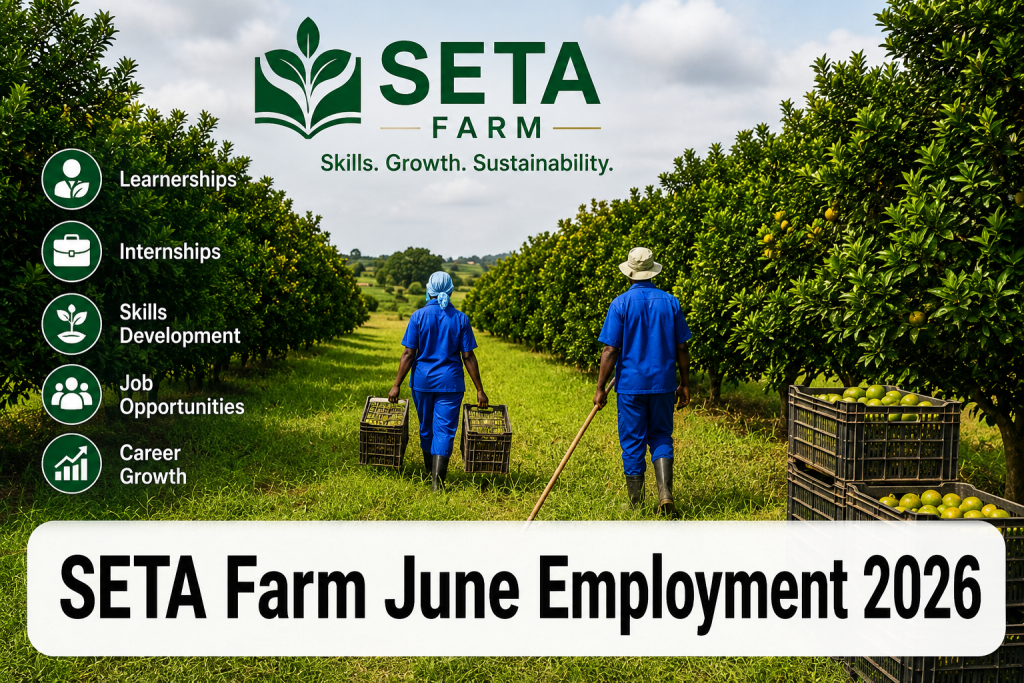
Farm Employment and Agricultural Training Opportunities Gain Momentum as SETA-Supported Skills Development Expands Across South Africa
As South Africa’s agricultural sector continues to play a vital role in food security, rural development, and economic growth, growing attention is being directed toward SETA Farm June Employment 2026, with thousands of young people expected to seek opportunities in agricultural learnerships, internships, apprenticeships, and workplace training programmes.
Industry experts believe that agriculture will remain one of the country’s most important employment sectors in 2026, creating pathways for school leavers, graduates, and unemployed youth looking to gain practical experience and industry-recognised skills.
With increasing demand for skilled workers in farming, agribusiness, food production, and agricultural technology, workplace learning opportunities are becoming a key entry point into the sector.
Why Agriculture Remains a Major Employment Sector in South Africa
Agriculture contributes significantly to South Africa’s economy while supporting millions of jobs throughout farming value chains.
Beyond crop production and livestock farming, the industry includes:
- Agricultural management
- Food processing
- Agribusiness operations
- Supply chain management
- Irrigation systems
- Agricultural technology
- Farm administration
- Agricultural engineering
- Export logistics
As the sector modernises, employers increasingly seek workers with both practical experience and technical knowledge.
This is where SETA-supported training initiatives become important.
What Is SETA Farm Employment?
SETA Farm Employment refers to workplace learning opportunities linked to South Africa’s skills development system, particularly within agriculture, farming, and agribusiness sectors.
These opportunities are often supported through partnerships involving employers, training providers, agricultural businesses, and sector-focused training authorities.
Useful Links:
Programmes may include:
Agricultural Learnerships
Structured programmes combining classroom-based learning with practical farm experience.
Internships
Workplace exposure opportunities for graduates and students pursuing careers in agriculture and related industries.
Apprenticeships
Technical training programmes linked to agricultural machinery, maintenance, engineering, and artisan trades.
Skills Development Programmes
Short-term occupational training designed to address specific industry needs.
Graduate Development Programmes
Professional workplace training opportunities aimed at graduates entering the agricultural sector.
Why June 2026 Could Be an Important Recruitment Period
Many agricultural employers begin recruitment activities ahead of seasonal production cycles and operational planning periods.
June often becomes a strategic period for workforce development initiatives because organisations are preparing for future production requirements and skills development targets.
For job seekers, this means opportunities may emerge across multiple provinces and agricultural industries.
Early preparation can provide a significant advantage.
Which Agricultural Careers Could Benefit From Skills Development Programmes?
Agriculture offers far more career options than many people realise.
Potential career pathways include:
Crop Production
Training related to planting, harvesting, irrigation, and farm management.
Livestock Farming
Skills development in animal health, breeding, production systems, and farm operations.
Agricultural Administration
Administrative and support functions within farming businesses.
Agricultural Technology
Emerging opportunities involving modern farming systems, data management, and precision agriculture.
Food Processing
Training linked to production, quality assurance, packaging, and distribution.
Supply Chain and Logistics
Managing the movement of agricultural products from farms to markets.
Agricultural Engineering
Technical and mechanical roles supporting modern farming operations.
These occupations contribute directly to the sustainability and growth of the agricultural sector.
The Growing Demand for Skilled Agricultural Workers
Agricultural employers increasingly require workers who understand modern farming practices, workplace safety, environmental sustainability, and production efficiency.
Industry analysts note several trends driving demand:
- Increased use of agricultural technology
- Expanding export markets
- Food security priorities
- Mechanisation of farming operations
- Sustainable agricultural practices
- Improved productivity requirements
As farming becomes more advanced, skills development programmes are becoming essential for workforce preparation.
Who Can Apply for Farm Skills Development Opportunities?
Agricultural learnerships and workplace training programmes often target a broad range of applicants.
Potential candidates may include:
Unemployed Youth
Young people seeking entry-level opportunities and workplace experience.
Matriculants
School leavers interested in agriculture and rural development.
TVET College Students
Students pursuing agricultural, engineering, or technical qualifications.
University Graduates
Graduates seeking practical experience before entering professional roles.
Rural Community Members
Individuals living in farming regions who want to develop industry-relevant skills.
Career Changers
Adults exploring opportunities within agriculture and agribusiness.
Expert Analysis: Agriculture Is Becoming More Skills-Driven
Career development specialists highlight a significant shift within the agricultural sector.
Modern agriculture increasingly relies on:
- Technical expertise
- Data-driven decision-making
- Environmental management
- Compliance standards
- Advanced machinery
- Efficient production systems
As a result, employers are placing greater value on structured workplace learning and recognised qualifications.
Young people who invest in skills development today may benefit from stronger career prospects tomorrow.
Documents Applicants Should Prepare
Candidates interested in agricultural opportunities should prepare key documents before recruitment periods begin.
Common requirements often include:
- South African ID document
- Certified Matric certificate
- Academic records
- Updated Curriculum Vitae (CV)
- Relevant qualifications
- Proof of residence where required
Digital copies should be stored securely and kept ready for online applications.
Local Perspective: Rural Skills Development Can Transform Communities
Agricultural training programmes provide benefits that extend beyond individual participants.
When young people gain skills and employment opportunities within their communities, local economies often benefit through:
- Increased household income
- Improved productivity
- Entrepreneurial development
- Skills transfer
- Greater economic participation
Across provinces such as Limpopo, Mpumalanga, KwaZulu-Natal, Eastern Cape, North West, Free State, and Western Cape, agricultural training continues to support both workforce development and rural economic growth.
How to Avoid Agricultural Recruitment Scams
Growing demand for training opportunities can attract fraudulent operators.
Applicants should be cautious if anyone:
- Requests application fees
- Promises guaranteed placement
- Requests banking details without verification
- Uses unofficial communication channels
- Advertises unrealistic employment offers
Legitimate learnerships and training programmes generally do not require payment from applicants.
Verification through official sources remains essential.
The Future of Agricultural Employment in South Africa
Agriculture remains one of South Africa’s most important industries.
As food production, sustainability, and rural development continue to shape national priorities, demand for skilled agricultural workers is expected to remain strong.
SETA Farm June Employment 2026 may provide valuable opportunities for young people seeking practical skills, workplace experience, and pathways into long-term employment.
For many applicants, participation in a learnership, internship, or skills programme could become the foundation of a successful agricultural career.
About the Author
SETA Careers Agriculture & Skills Development Editorial Team
The editorial team specialises in researching South African learnerships, internships, agricultural training programmes, apprenticeships, bursaries, TVET education, and workforce development initiatives. Content is developed using public information, labour market research, and official skills development resources.
Editorial Standards and Transparency
This article was independently researched and written for educational purposes.
Our editorial principles include:
- Fact-based reporting
- Independent research
- Transparent sourcing
- Human-written content
- Regular updates and reviews
- Educational integrity
We do not recruit applicants, collect personal documents, or process applications.
Sources and References
- Department of Higher Education and Training (DHET)
- Skills Development Act 97 of 1998
- AgriSETA publications and strategic reports
- South African Qualifications Authority (SAQA)
- Quality Council for Trades and Occupations (QCTO)
- Statistics South Africa agricultural and labour market reports
- Department of Agriculture publications
- National Skills Authority (NSA)
- South African agricultural industry reports and workforce development frameworks
Disclaimer
This website is an independent educational and career information platform. We are not affiliated with any SETA, employer, government department, recruitment agency, or training provider unless explicitly stated. Information is published for educational purposes only. Applicants should verify programme requirements, deadlines, and application procedures through official sources before applying.